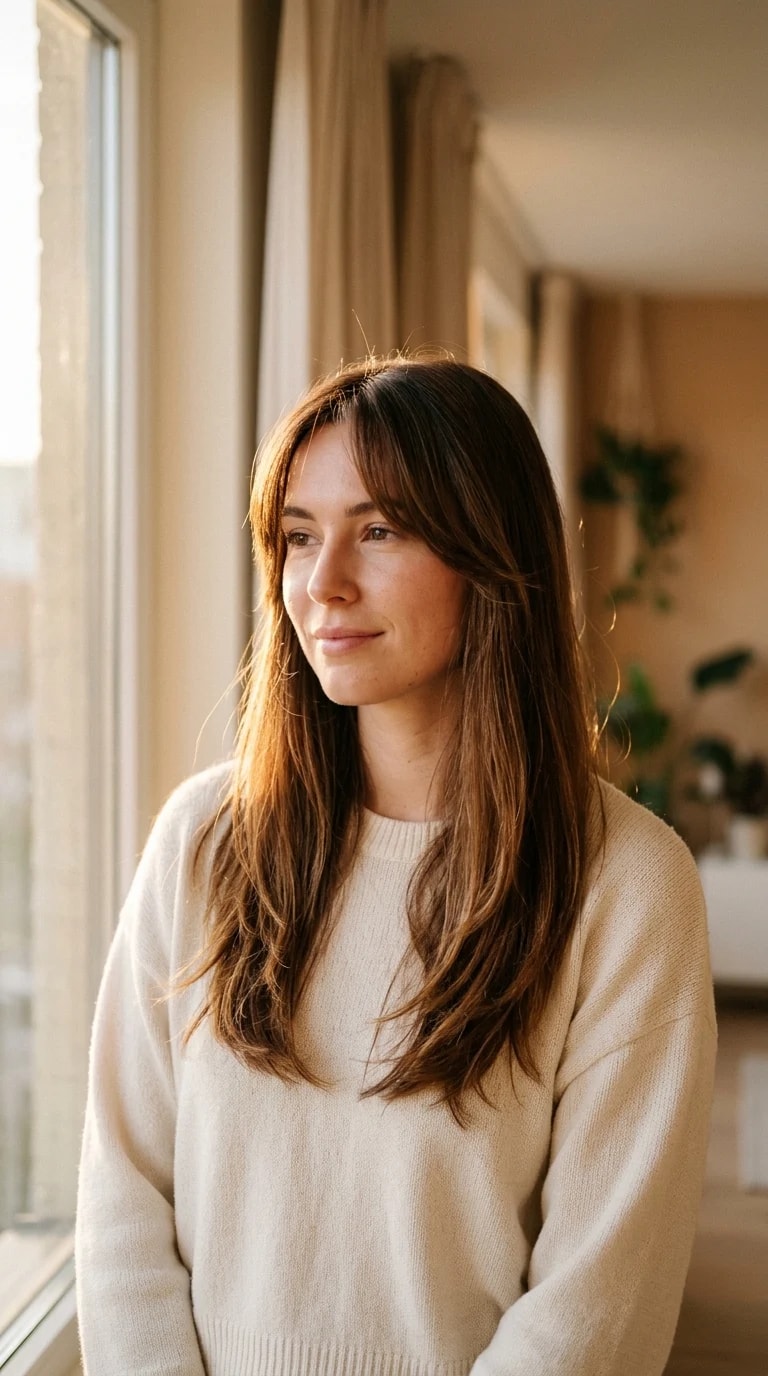
There is a particular kind of calm in a photo like this: a woman framed by a window, long brown waves falling past her shoulders, bangs skimming her cheekbones, a cream knit sweater, the last warm light of the day catching every strand. It is the sort of image people save to a folder called hair goals — soft, face-framing, unhurried. The good news is that this same mood translates beautifully into a quick weave, provided you talk shape, texture, and finish with your stylist before the first track goes down.
A quick weave earns its name because the foundation is fast: hair braided or capped flat, tracks glued in, a bundle or two of hair laid over the top. What separates a stiff, wig-like result from hair that melts is rarely the speed — it is the detail work. Ask for a modest leave-out at the parting and hairline so the install blends with your own texture, and insist that the cut happens after the install, not before. Cutting on the head is what gives you movement instead of a curtain of hair that hangs at one length.
The look in this image lives and dies by its front section. Request soft face-framing layers that begin around the brow and taper toward the jaw, with bangs that are point-cut rather than blunt. Ask your stylist to thin the density slightly at the front so the pieces separate instead of clumping, and choose a loose body wave or a silky straight texture that matches your natural leave-out — a mismatch of three shades and two textures is the fastest way to lose the softness. For most faces, ten to fourteen inches through the front is enough to frame without swallowing your features.
Color does the rest. Warm brown, chestnut, and soft auburn tones read beautifully in golden-hour light, while cool ash shades can look flat in the same setting. If you want dimension, keep highlights fine and concentrated around the face rather than throughout. When you photograph the finished style, sit beside a window and let the light fall across your cheek rather than overhead — the same gentle shadows that make this portrait feel warm will flatter a fresh install too. At night, wrap with a satin scarf, keep heat tools low, and refresh the front with water and a light leave-in rather than heavy oil.
What makes this style worth copying is not perfection but mood: soft layers, warm tones, and hair that looks like it belongs to the person wearing it. Bring a reference photo to your consultation, be specific about the front, and let the rest stay easy.