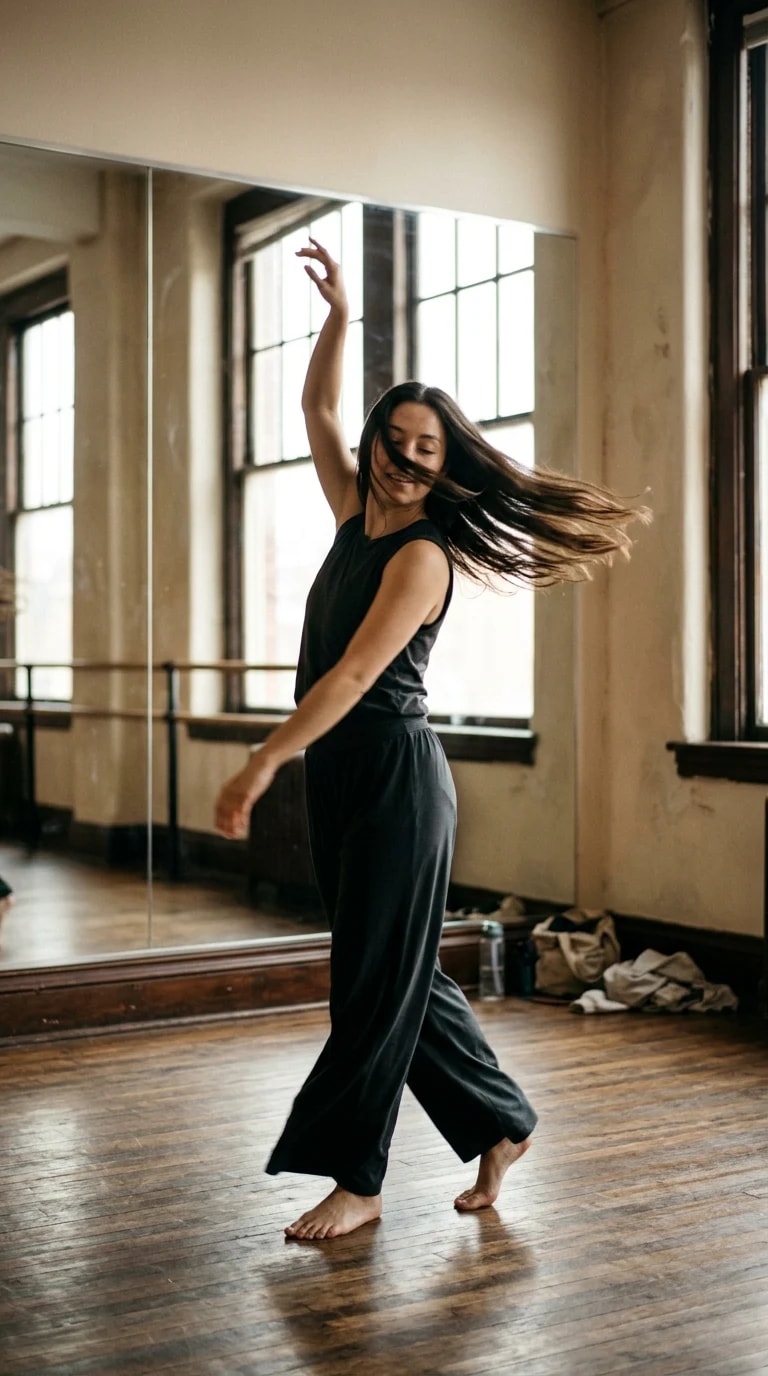
There is a moment in every dance class when the hair decides whether it is part of the movement or a distraction from it. In the studio, a woman turns barefoot across the polished floor, her long dark hair sweeping her cheek and streaming behind her, and the style itself is doing quiet work: holding at the back, letting the ends fly, keeping the shape readable even mid-turn. That is the whole trick of a tied hairstyle for women — the tie is not there to freeze the hair, it is there to give the movement a place to start from.
Anchor placement matters more than the knot. A tie set low, near the nape, follows the skull instead of fighting it, so when you turn your head the hair swings from a point that already moves with you. Set too high and every spin pulls against the crown; set too low and the weight drags the front flat. The middle ground — roughly level with the earlobe, sitting slightly toward the back — holds through a barre series, a walk to the train, and the long hours in between. If the style needs to survive real motion, pair the band with two crossed pins underneath, hidden but doing the structural work.
Texture is the other half. Hair that has a little grip, whether from second-day oils or a light mist of salt spray, holds a knot far better than hair that has just been smoothed flat. The studio light shows it clearly: soft window daylight catches the flyaway strands around the face and turns them into something intentional rather than messy. Rather than fighting frizz, leave the front soft and let the tie do its job behind. Ends that flick and bounce read as energy; ends that have been flattened into submission read as a style that has already given up.
Before you leave the room, run the test that dancers run. Turn your head twice, drop your chin, shake out your shoulders, and check the tie in the mirror. If it has shifted more than a finger's width, the tension is wrong — either too tight at the band or too loose at the base. Loosen the band a half turn, push the knot up slightly, and pin the loose ends of the band back into the base so nothing shows. A minute of adjustment now saves a whole class of re-tying later.
What makes a tied style feel graceful is not the perfection of the knot but the permission it gives you to forget about it. The room stays warm and still, the barre waits, the mirror doubles everything you do — and the hair simply follows along, gathering and releasing with each turn. Get the anchor right, leave a little texture, and the tie becomes the least interesting part of the look, which is exactly what it should be.